
Skate-Ready: How to dress your skater for the ice
Tips and help with finding the right skates, equipment, and clothing for your skater!
CanSkate and Pre-Star Equipment and Clothing Guide
Skaters should wear warm, comfortable clothing in layers with water proof pants on top as they learn. Please have your child wear gloves. However, do not overdress skaters- once they are moving around, they become quite warm. Remember, the more clothing, the less mobility a skater has. As a skater progresses, he or she might want to wear a skating outfit- skating dresses or skirts or skating pants in a stretch material.
Please note: Skaters in Pre-Star must have Lace Up Figure Skates, Not Lace Up Hockey Skates.
.png)
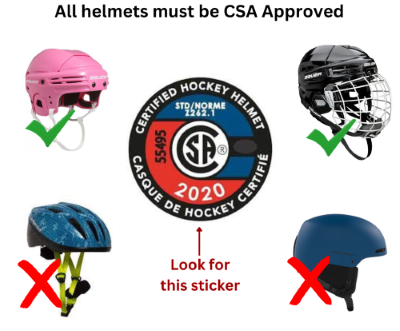
Helmets : CSA helmets are mandatory for Pre-CanSkate, CanSkate and Pre-Star skaters.
NO BIKE HELMETS ( YOU WILL BE TURNED AWAY) Look for the CSA - Approved Hockey Helmet sticker.
Skates - Proper equipment in good condition is essential. Skaters who use ill-fitting, poor quality or inappropriate equipment cannot expect to progress quickly or develop good technique. Skates should fit, provide appropriate support, be laced properly, have a good quality blade, be protected with guards when being worn off the ice and be professionally sharpened periodically.
Skates should fit like shoes, allowing no more than about half a size for foot growth. It is difficult for a child to tell whether a pair of skates fit well, so it is best to rely on an experienced and knowledgeable salesperson.
When a skate fits well, the skater’s heel should be firmly placed at the back of the boot with his toes gently touching the toecap. When the heel of the boot is held firmly down with one’s hand, the skater should not be able to lift his heel away from the bottom of the boot to any great degree. When the skates are laced, the laces should be pulled snugly over the ankle, but loosely over the toe and the front of the foot. The tongue should be wide enough to stay in place and the front opening of the boot should be wide enough to pull the laces tight. Tie the laces securely but be able to put one finger down the back of the boot.
Care of Skates
- Make sure the blades are professionally sharpened at the beginning of the season and periodically check them for dullness or nicks.
- Skate guards should be worn any time the skater is not on the ice.
- Do not store the skates with the guards left on- the blades will rust. After skating, blades and skates should be dried thoroughly with a soft cloth. Between skating sessions, the skates should be taken out of the skate bag and allowed to air and dry completely- inside and out!
- Skates should be kept clean and the laces tucked in when they are worn.
STARSkate Equipment and Clothing Guide
To ensure safety and strong performance, skates should be kept sharp. Dull blades make it difficult to control movement on the ice. We recommend sharpening every 20 hours of skating — about every 2–3 weeks for senior skaters and every 3–4 weeks for juniors. Proper fit is essential. Skates with soft or creased ankles do not provide enough support and can increase the risk of injury. Check the Equipment Guide below for photos and tips on selecting the right fit.
Always wear hard skate guards when walking to and from the ice. After skating, dry blades thoroughly and cover them with soft guards (“soakers”) to prevent rust and damage.
.png)